Showing posts with label moon. Show all posts
Showing posts with label moon. Show all posts
Monday, February 1, 2021

Wednesday, February 26, 2020
Earth's 2nd Moon
BIG NEWS (thread 1/3). Earth has a new temporarily captured object/Possible mini-moon called 2020 CD3. On the night of Feb. 15, my Catalina Sky Survey teammate Teddy Pruyne and I found a 20th magnitude object. Here are the discovery images. pic.twitter.com/zLkXyGAkZl
— Kacper Wierzchos (@WierzchosKacper) February 26, 2020
via Boing Boing
"Our new moon is probably between 1.9 and 3.5 metres across, or roughly the size of a car, making it no match for Earth’s primary moon. It circles our planet about once every 47 days on a wide, oval-shaped orbit that mostly swoops far outside the larger moon’s path.
The orbit isn’t stable, so eventually 2020 CD3 will be flung away from Earth. “It is heading away from the Earth-moon system as we speak,” says Grigori Fedorets at Queen’s University Belfast in the UK, and it looks likely it will escape in April."
Tuesday, September 3, 2019
Astronaut walking on moon surface
Published on Sep 1, 2019 India Today Social
Astronaut walking on moon surface in Bengaluru
Wednesday, August 14, 2019

Tuesday, January 15, 2019
First Plant Grown on The Moon

via the Gaurdian
"A small green shoot is growing on the moon after a cotton seed germinated onboard a Chinese lunar lander, scientists said.
The sprout has emerged from a lattice-like structure inside a canister after the Chang’e 4 lander touched down earlier this month, according to a series of photos released by the Advanced Technology Research Institute at Chongqing University.
'This is the first time humans have done biological growth experiments on the lunar surface,' said Xie Gengxin, who led the design of the experiment, on Tuesday."
Thursday, June 8, 2017
LUNAR
LUNAR from Christian Stangl on Vimeo.
"This short film is dedicated to all people who believe in peaceful expansion of our borders.
In the year 1957 the cold war expands to space. The Soviet-Union sends Sputnik as the first manmade object into earth-orbit.
3 years later Yuri Gagarin enters space as the first man in space. The so called "Space Race" seems to be decided.
But in 1961 President Kennedy promised to send American Astronauts to the Moon.
The Apollo Project was born. A space ship had to be built that is strong enough to escape earth's gravitation, land on the moon and bring the crew safely back to earth.
Motion Designer Christian worked with his brother and Composer Wolfgang for 18 months on this shortfilm.
The foundation were thousands original NASA photographies, taken from the Astronauts during the Apollo Missions, which were released in September 2015. It is an animated collage using different techniques to bring the stills to life.
Thursday, September 15, 2016
Wednesday, December 2, 2015

Friday, November 6, 2015
John Lewis Christmas Advert 2015 - #ManOnTheMoon
Published on Nov 5, 2015 John Lewis
"Watch the new John Lewis Christmas TV advert with The Man on The Moon.
Click here to continue the story:
http://bit.ly/1ky008K
This is the story of a young girl called Lily. Looking at the moon through her family telescope one night, she is amazed at what she finds, a man on the moon.
Lily watches on as our man goes about his chores, all alone up there. She becomes determined to get something to the moon, to send him a message and show him that someone down here is thinking of him.
The music is ‘Half the World Away’ performed by Aurora, the original song was by Oasis."
Friday, October 2, 2015


Tuesday, September 29, 2015
Supermoon Total Lunar Eclipse and Lightning Storm

via NASA
"Image Credit & Copyright: Jose Antonio Hervás
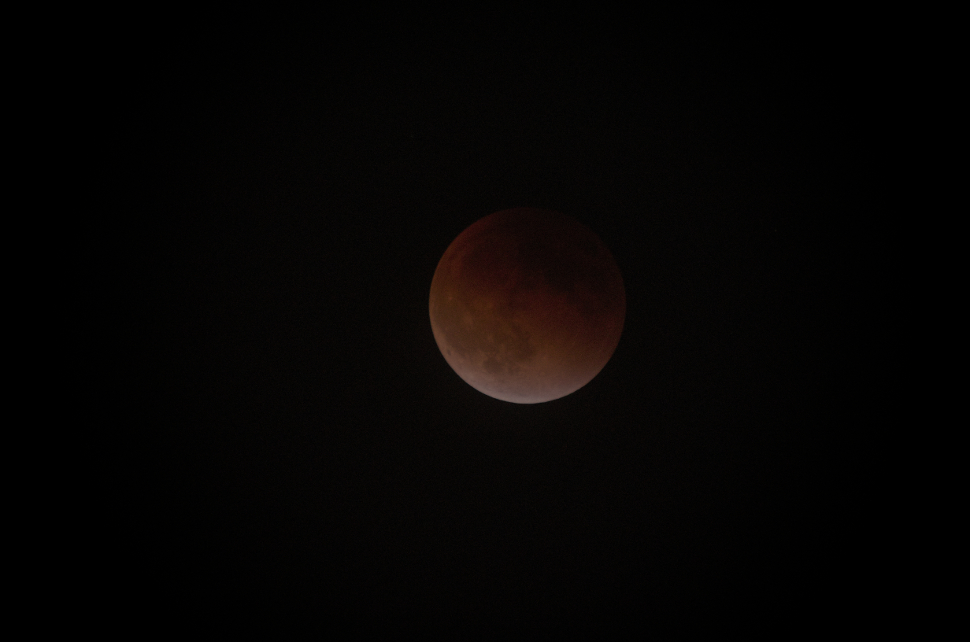
Explanation: What's more rare than a supermoon total lunar eclipse? How about a supermoon total lunar eclipse over a lightning storm. Such an electrifying sequence was captured yesterday from Ibiza, an island in southeastern Spain. After planning the location for beauty, and the timing to capture the entire eclipse sequence, the only thing that had to cooperate for this astrophotographer to capture a memorable eclipse sequence was the weather. What looked to be a bother on the horizon, though, turned out to be a blessing. The composite picture features over 200 digitally combined images from the same location over the course of a night. The full moon is seen setting as it faded to red in Earth's shadow and then returned to normal. The fortuitous lightning is seen reflected in the Mediterranean to the right of the 400-meter tall rocky island of Es Vedra. Although the next total eclipse of a large and bright supermoon will occur in 2033, the next total eclipse of any full moon will occur in January 2018 and be best visible from eastern Asia and Australia."



Sunday, September 27, 2015
NASA | Supermoon Lunar Eclipse
Published on Aug 31, 2015 NASA Goddard
"On September 27th, 2015 there will be a very rare event in the night sky – a supermoon lunar eclipse. Watch this animated feature to learn more."
Wednesday, August 19, 2015
Did the Moon Create Life on Earth?
Published on Aug 19, 2015 Science Channel
"Without the strong pull of the moon, would there have been the massive tidal pools that were the perfect mixing bowl for life?"
Tuesday, August 18, 2015
The Secret of the Dark Side of the Moon
Published on Aug 18, 2015 Science Channel
"Earth's gravity is so strong we only see one side of the orbiting moon. Modern exploration to the mysterious dark side revealed dramatic surprises and revised theories about the moon's formation."
Wednesday, August 5, 2015
Amazing video of the Moon crossing the face of Earth
Published on Aug 5, 2015 io9
"From NASA: A NASA camera aboard the Deep Space Climate Observatory (DSCOVR) satellite captured a unique view of the moon as it moved in front of the sunlit side of Earth last month. The series of test images shows the fully illuminated 'dark side' of the moon that is never visible from Earth."
Friday, July 3, 2015
Venus, Jupiter and the Moon

"Explanation: On June 30, Venus and Jupiter were close in western skies at dusk. Near the culmination of this year's gorgeous conjunction, the two bright evening planets are captured in the same telescopic field of view in this image taken after sunset from Bejing, China. As the two bright planets set together in the west, a nearly Full Moon rose above the horizon to the south and east. Imaged that night with the same telescope and camera, the rising Moon from the opposite part of the sky is compared with the planetary conjunction for scale in the digitally composited image. The full lunar disk covers an angle of about 1/2 degree on the sky. Visible as well in binoculars and small telescopes are Venus' crescent and Jupiter's four Galilean moons. Of course, Venus and Jupiter are still close."
Saturday, April 19, 2014
Measuring the Distance from the Earth to the Moon

via NASA
"Explanation: This is not a scene from a sci-fi special effects movie. The green beam of light and red lunar disk are real enough, captured in the early morning hours of April 15. Of course, the reddened lunar disk is easy to explain as the image was taken during this week's total lunar eclipse. Immersed in shadow, the eclipsed Moon reflects the dimmed reddened light of all the sunsets and sunrises filtering around the edges of planet Earth, seen in silhouette from a lunar perspective. But the green beam of light really is a laser. Shot from the 3.5-meter telescope at Apache Point Observatory in southern New Mexico, the beam's path is revealed as Earth's atmosphere scatters some of the intense laser light. The laser's target is the Apollo 15 retroreflector, left on the Moon by the astronauts in 1971. By determining the light travel time delay of the returning laser pulse, the experimental team from UC San Diego is able to measure the Earth-Moon distance to millimeter precision and provide a test of General Relativity, Einstein's theory of gravity. Conducting the lunar laser ranging experiment during a total eclipse uses the Earth like a cosmic light switch. With direct sunlight blocked, the reflector's performance is improved over performance when illuminated by sunlight during a normal Full Moon, an effect known as the real Full Moon Curse."
Subscribe to:
Posts (Atom)